
Hybspec
2026-03-259 minLive Data i DiagnostykaSeries: Diagnostyka / Testy aktywne

Active Tests in Diagnostics: What They Show and What They Don't Do for You

Active tests sound like a shortcut to the answer: click, the fan starts, the pump responds, the valve clicks, and you know. In practice, it's one of the best diagnostic tools, but only when you use it at the right point in the process. An active test alone doesn't replace live data, freeze frame, or measurements. What it does show is whether the controller can force a system response and whether that response is logical.
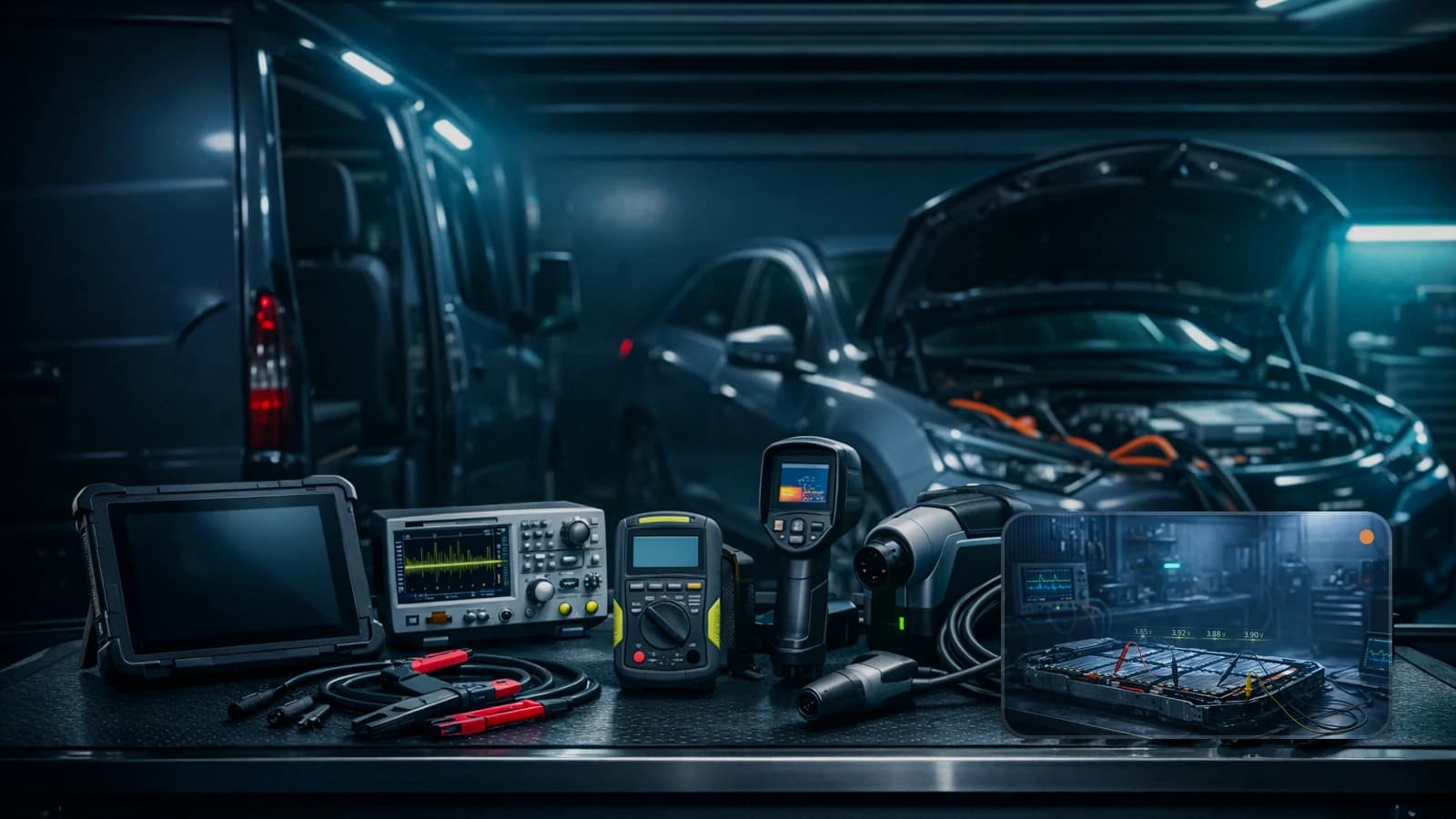
Stanowisko diagnostyczne Hybspec z komputerem i interfejsem podczas testow aktywnych.

In short: an active test shows whether the controller can force a system response and whether the component responds logically

That's exactly why an active test is so useful for problems with fans, valves, pumps, throttle bodies, or emission systems. You're not asking what the system "thinks" — you're checking whether something actually happens in the car after the command.

The method only makes sense in the right context. First, you need to know the symptom, activation conditions, and data dependencies. That's why with us, an active test is one stage of engineering diagnostics based on live data and measurements, not a trick to turn off a warning light.

Zapamiętaj

Objaw vs przyczyna

Pierwszy winny z listy błędów rzadko bywa tym właściwym.

Active tests sound like a shortcut to the answer: click, the fan starts, the pump responds, the valve clicks, and you know. In practice, it's one of the best diagnostic tools, but only when you use it at the right point in the process.

What an active test really gives, and what it won't do for the diagnostician?

It gives the ability to force an actuator to operate and check whether the system responds. That's a lot, because you immediately see whether the lack of response comes from the component itself or from a problem starting in the power supply, ground, relay, or controller logic.

But it won't do the most important thing for you: it won't independently determine why a given response is illogical. For that, you need live data, controller topology, freeze frame, and sometimes a measurement on the wire.

  • forces a system response instead of just waiting for the symptom
  • helps distinguish a lack of control from a component failure
  • does not replace measurements of power supply, ground, and circuit continuity

Fan, pump, EGR, flap: when does an active test shorten diagnostics the most?

It's most evident where the component has a clear response after the command. If you force the fan and get no response, you immediately narrow the area: control, fuse, ground, the fan motor itself, or a logical lockout.

The same applies to EGR valves, auxiliary pumps, actuators, flaps, and some transmission procedures. In such scenarios, verifying ground, voltage drops, and the circuit very quickly shows whether the active test is hitting a dead end due to an electrical problem.

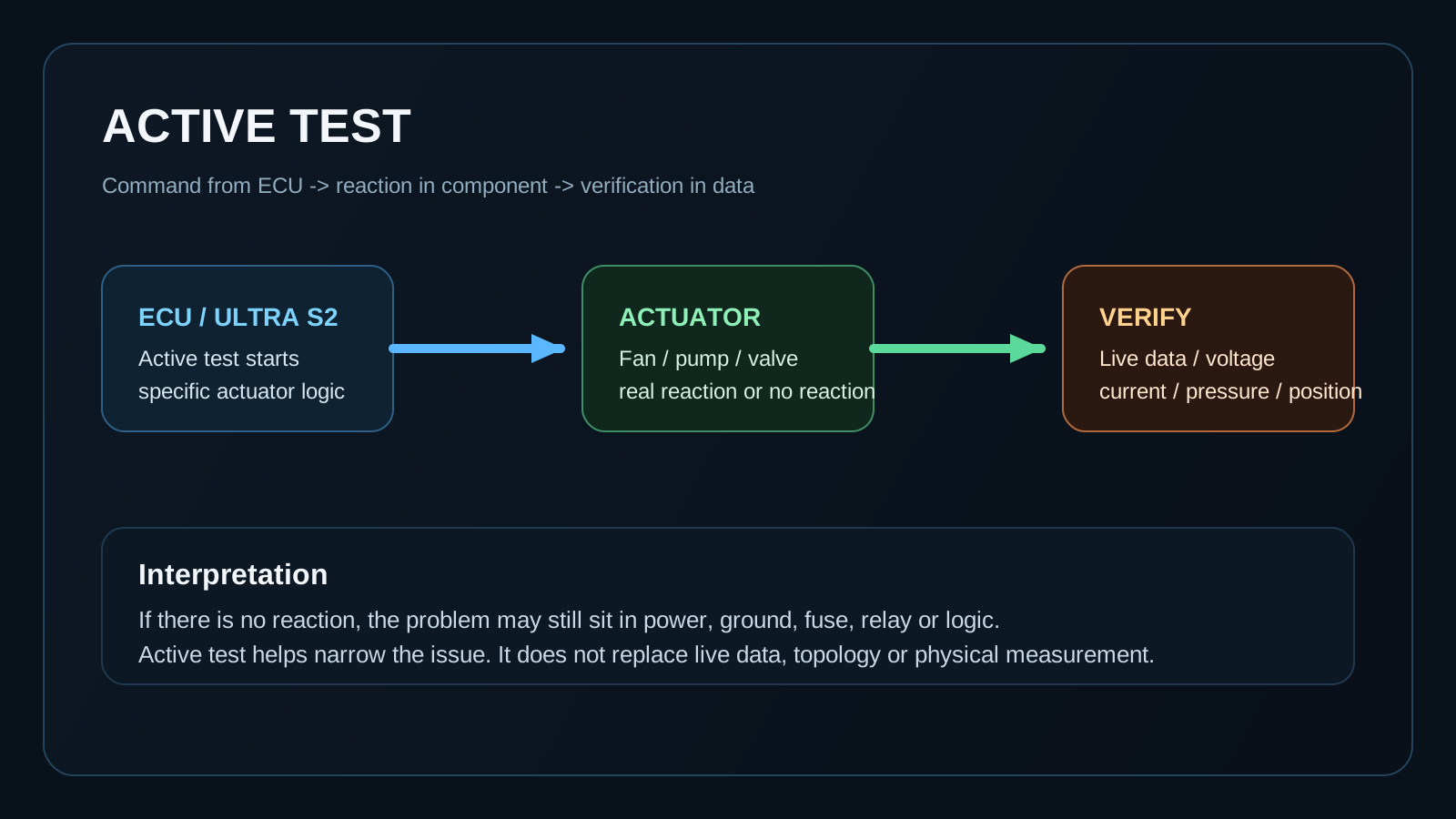
Dependency diagram: controller command, component response, and verification in data.
Active Test

An active test is for checking response, not for guessing for the mechanic

It delivers the most when you combine the controller command with system response, live data, and a physical measurement.

Did you know...Diagnostics

Testy aktywne (np. włączenie wentylatora z testera) pokazują tylko, że komponent odpowiada na sygnał — nie mówią nic o tym, czy działa prawidłowo pod obciążeniem.

Read more

Why the best result comes from combining an active test with live data and freeze frame?

Because the sound of a clicking valve alone decides nothing. What matters is whether the parameters that should change actually changed after the command. Whether pressure rises, temperature drops, position changes, or the controller still sees an inconsistency.

That's exactly why well-planned diagnostics combines an active test with live data and freeze frame. Only such a set gives certainty whether you're reacting to the real cause or just its effect.

Typowa pułapka

Typowa pułapka

Jeśli diagnoza jest szybsza niż pomiar, zwykle jest też za droga.

Because the sound of a clicking valve alone decides nothing. What matters is whether the parameters that should change actually changed after the command.

No response after command: when is the component at fault, and when is it the circuit, relay, or bad ground?

This is one of the most common workshop mistakes. The component doesn't respond in the test, so someone immediately orders a new part. Meanwhile, very often the problem sits nearby: an oxidized ground point, voltage drop on the wire, relay, fuse, bad contact, or an open circuit.

In such cases, controller topology and logic also come into play. If the module reports lost communication or CAN/DoIP layer errors, the active test may only be a symptom of a broader problem.

Decision: when does an active test make sense, and when should you go straight into full diagnostics?

If the symptom concerns a specific actuator system and can be logically forced, an active test is a great step. However, if the car has communication errors, unstable power supply, or the symptom only appears under dynamic driving conditions, the test alone is not enough.

In that case, it's best to go into full diagnostics of combustion ECUs with live data and topology, and for VAG platform topics, also go through VAG diagnostics on Gateway and data.

FAQ: Active Tests in Diagnostics

Does an active test immediately show which part is faulty?+

No. An active test shows whether the controller can force a system response and whether the component responds logically. You still need to correlate it with live data, power supply, and the conditions under which the symptom occurs.

Does a lack of response in an active test always mean a faulty component?+

Not always. Just as often, the culprit is the power supply, ground, fuse, relay, broken wire, or a logical condition blocking the test.

Does an active test make sense for fan, EGR, or pump problems?+

Yes. These are some of the best scenarios for active tests because you can immediately compare the controller's command with the actual component response.

How is an active test different from live data?+

Live data shows what the controller sees and calculates during operation. An active test lets you impose a condition and check how the system responds after the command.

Does a standard OBD scanner have the same active tests as equipment like the Ultra S2?+

Usually not. The range of active tests depends on the device class, brand coverage, and specific model. In practice, the most valuable tests are those with full access to systems and accompanying data.

Related services

If you want to verify this, check the service

Consult result