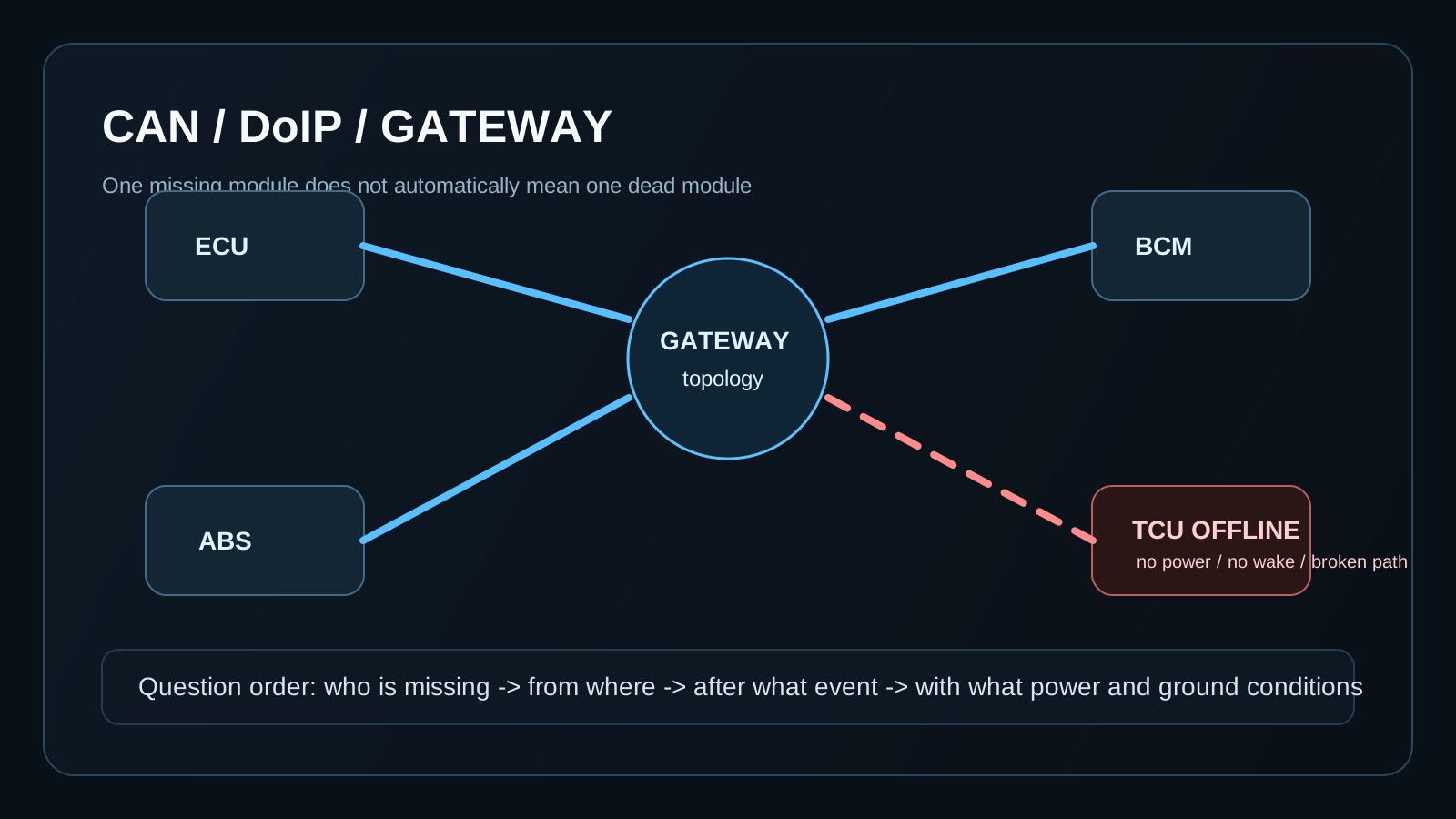
First, we determine whether the problem lies in the module itself or in the path between modules. In VAG, the Gateway is key; in newer premium cars and EVs, Ethernet and DoIP diagnostics come into play. The protocol name itself doesn't fix the car, but it tells you where to look for dependencies.
Specific reference values help quickly narrow down the cause. On the CAN bus, voltage levels in the dominant state are CAN-H 3.5 V and CAN-L 1.5 V (difference 2.0 V), and in the recessive state both lines should show about 2.5 V. A deviation greater than 0.5 V from the nominal value indicates a wiring or connector problem. The termination resistance measured between CAN-H and CAN-L should be 60 Ohms (two 120 Ohm resistors in parallel). If the multimeter shows 120 Ohms, one resistor is missing; if 40 Ohms, there is excess termination in the network.
DoIP (Ethernet) in premium cars and EVs operates on 100BASE-T1 over a single twisted pair at 100 Mbit/s. A proper ping response time is below 10 ms; above 100 ms signals an overloaded Gateway or a transport layer problem. The Gateway response timeout for standard diagnostic queries should be below 200 ms. If it exceeds 500 ms, the cause may be a firmware issue, an overloaded bus, or unstable Gateway power supply.
At this layer, VAG diagnostics on Gateway and data is particularly useful, because many platform symptoms start with a loss of logical consistency between modules.