2026-03-02 • 8 minZakup i Weryfikacja
NRGkick and the Regenerative Charging Test Before Buying a PHEV
Plug-ins can mask charging issues. A live test reveals whether the OBC and battery work stably.
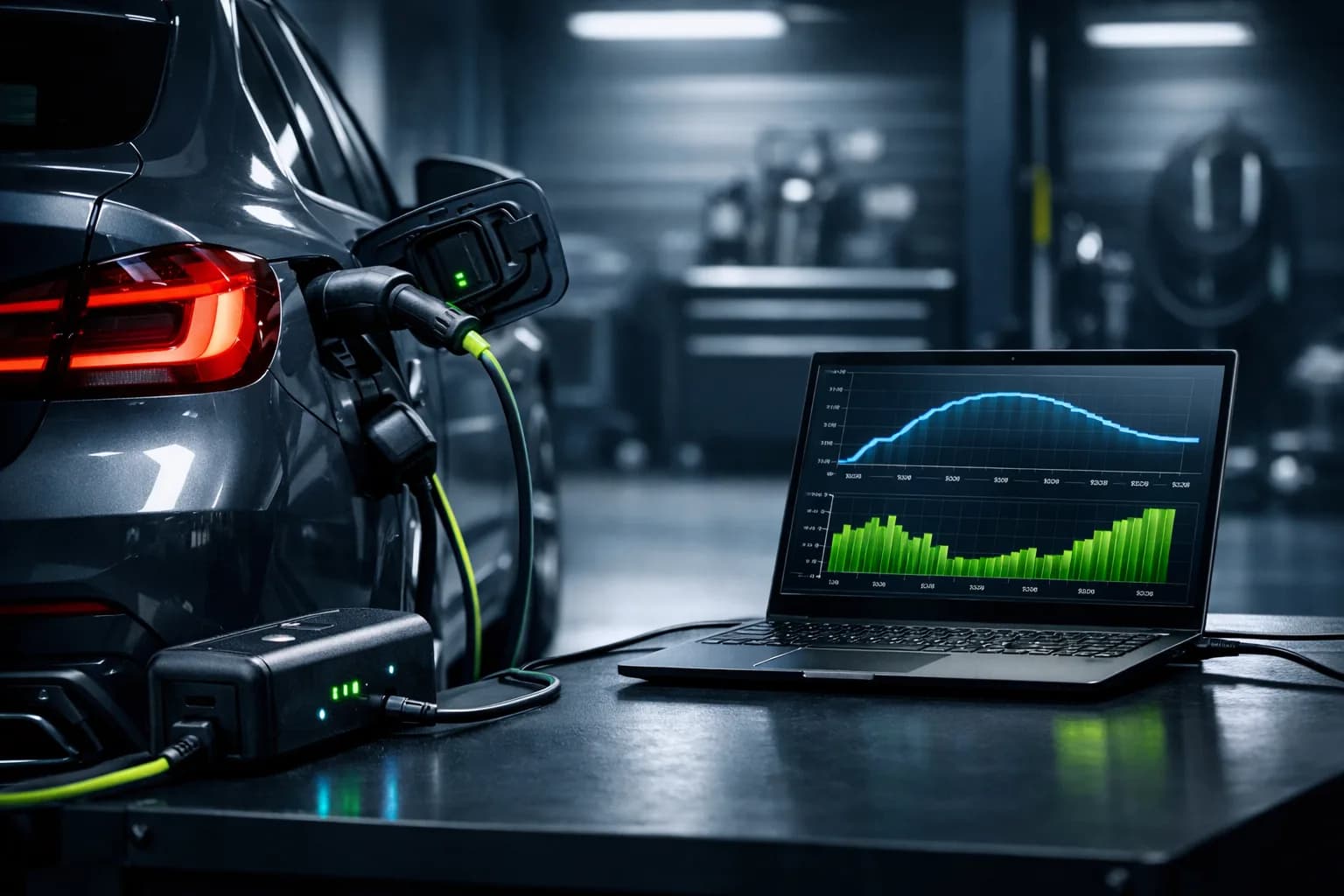

Plug-ins can mask charging issues. A live test reveals whether the OBC and battery work stably.
In a PHEV (plug-in), a test drive alone often won't reveal charging issues. The car may "drive" but have a faulty OBC, AC path, or Type 2 port communication.
A charging test with an EVSE (e.g., NRGkick) quickly shows current stability, response to voltage drops, and whether the car's data behaves logically.
This is one of the most cost-effective pre-purchase tests, as it reduces the risk of expensive diagnostics after signing the contract.
Ogłoszenie vs rzeczywistość
Ładne ogłoszenie nie jest jeszcze dobrym autem.
Plug-ins can mask charging issues. A live test reveals whether the OBC and battery work stably.
A damaged on-board charger or an unstable AC path can radically reduce a PHEV's functionality.
In daily use, this translates to higher fuel consumption and lower cost-effectiveness of the car.
The worst-case scenario is buying a PHEV that "won't" charge or charges unstably — then the electric mode ceases to be a real benefit, and you're left with a heavier combustion car.
The charging curve, current stability, temperatures, and system behavior under energy recovery. NRGkick allows charging with power up to 22 kW (3×32 A) or 11 kW (3×16 A). A typical PHEV charges at 3.6 kW single-phase or 7.2–11 kW three-phase.
OBC (On-Board Charger) efficiency should be 90–95% — we measure it by comparing wall consumption with the battery SOC increase. Charging current stability with fluctuations <5% is the norm. This allows distinguishing normal characteristics from signs of failure.
Regeneration power in a typical PHEV peaks at 20–60 kW, and in urban conditions averages 5–15 kW. In parallel, we compare the result with the seller's declarations and real diagnostic data to avoid confusing infrastructure limitations with a problem on the car's side.
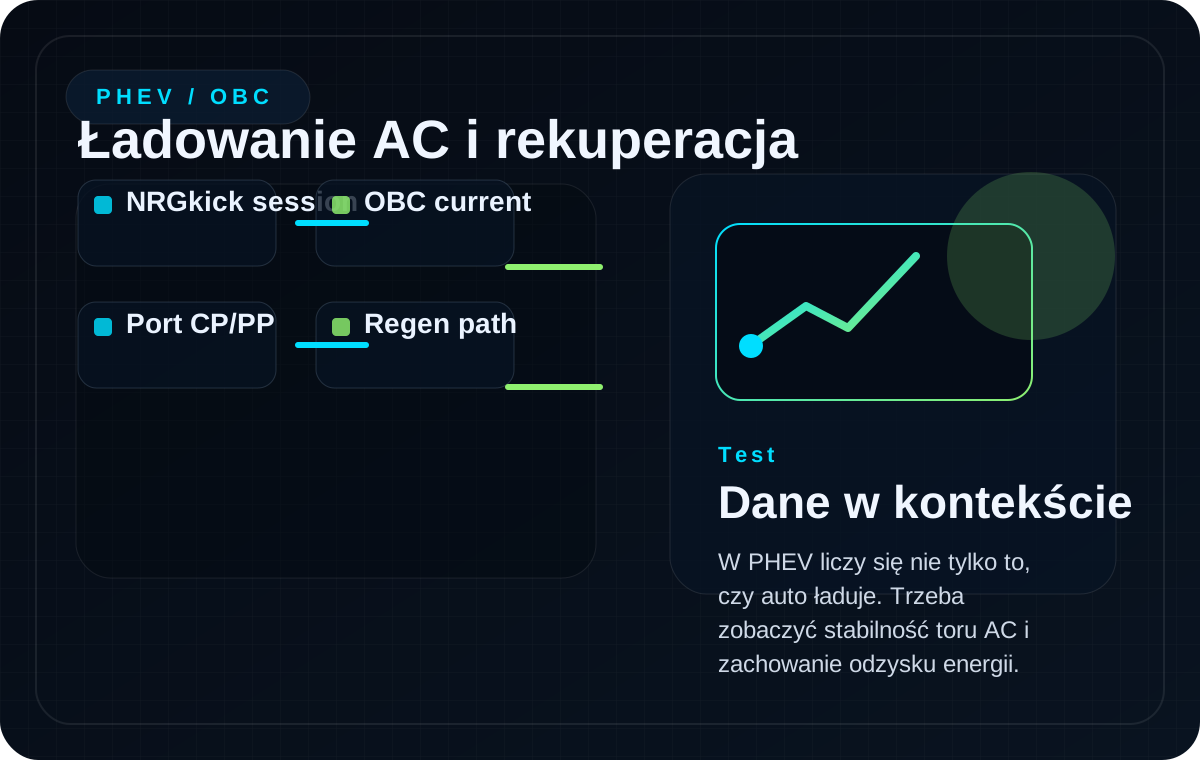
Live OBC and Regeneration Test
During the examination, we simultaneously monitor the AC charging curve, port communication, and system behavior under energy recovery.
Standard ECE R100 wymaga minimum 100 Ω na każdy volt napięcia DC i 500 Ω/V dla AC. Dla systemu 400V to minimum 40 kΩ rezystancji izolacji.
Read more→Nowsze samochody (od ~2019) używają protokołu DoIP (Diagnostics over IP) zamiast klasycznego CAN — diagnostyka odbywa się przez Ethernet z prędkością do 100 Mbit/s.
Read more→Slower charging from a 230V outlet doesn't always mean a car fault — often it's limited by the building's installation (voltage drops, plug overheating, current limiting by the EVSE).
Therefore, the result is read in context: grid stability, current behavior, CP/PP communication, and the car's reaction to changing conditions.
If you want to better understand how "paper" declarations translate into reality, also see: how to verify real EV range.
Decyzja zakupowa
Najwięcej kosztuje to, czego nie sprawdziłeś przed umową.
Slower charging from a 230V outlet doesn't always mean a car fault — often it's limited by the building's installation (voltage drops, plug overheating, current limiting by the EVSE). Therefore, the result is read in context: grid stability, current behavior, CP/PP communication, and the car's reaction to changing conditions.
Before buying a used car and after accident repairs, when the risk of hidden damage is higher.
The test provides a strong negotiating argument and reduces purchase uncertainty.
It's especially worth doing when the service history is incomplete or the car was charged on random infrastructure.
If charging is stable and consistent with declarations — that's a big plus when buying a PHEV.
If instability, communication errors, or illogical parameter behavior are visible — stop the purchase and perform a more complete HV/charging system diagnostics.
In such cases, a full HV battery and HV system diagnostics usually makes sense: full HV pack and inverter analysis.
Frequently Asked Questions About Charging and Regeneration (FAQ)
Not always. Sometimes only the plastic communication pins (CP/PP) are mechanically broken, or the small locking actuator that secures the plug in the car is damaged. Computer diagnostics and a physical inspection of the port allow us to precisely separate a fault of the socket itself from a critical failure of the internal OBC module.
It could be, but often the problem lies in the building's electrical installation. Smart EVSEs measure the temperature in the plug and voltage drops in the home installation. If your wall cables are old or thin, the charger will proactively reduce the charging current (e.g., from 10A to 6A) to prevent a fire. NRGkick allows us to verify where the bottleneck is.
Not at all. DC fast chargers bypass the car's on-board charger (OBC) and feed current directly into the traction battery, because the station acts as a powerful inverter. Not using home AC charging for an extended period does not damage the hardware itself, but it adversely affects the process of battery cell balancing.
Precyzyjny odczyt SOH, test inwerterów i rozwiązywanie problemów z zasięgiem.
Test baterii, izolacji i lakieru. Nie kupuj hybrydy w ciemno.