
Hybspec
2026-03-028 minLive Data i Diagnostyka

EV range and battery degradation: how to tell if the seller is cheating

You go to see your dream Nissan Leaf, Volkswagen ID.4 or Kia e-Niro. The seller proudly turns on the ignition, and the dashboard shows a promising 400 kilometres of range. 'The battery is like new, just drive it!' you hear. You pay, go home, and after a few days of normal city driving you notice that a full charge barely covers 240 kilometres. What happened? You've just fallen victim to the 'Guess-o-meter' and a clever manipulation of the battery management system. The range indicator in used cars is the biggest liar on the automotive market.
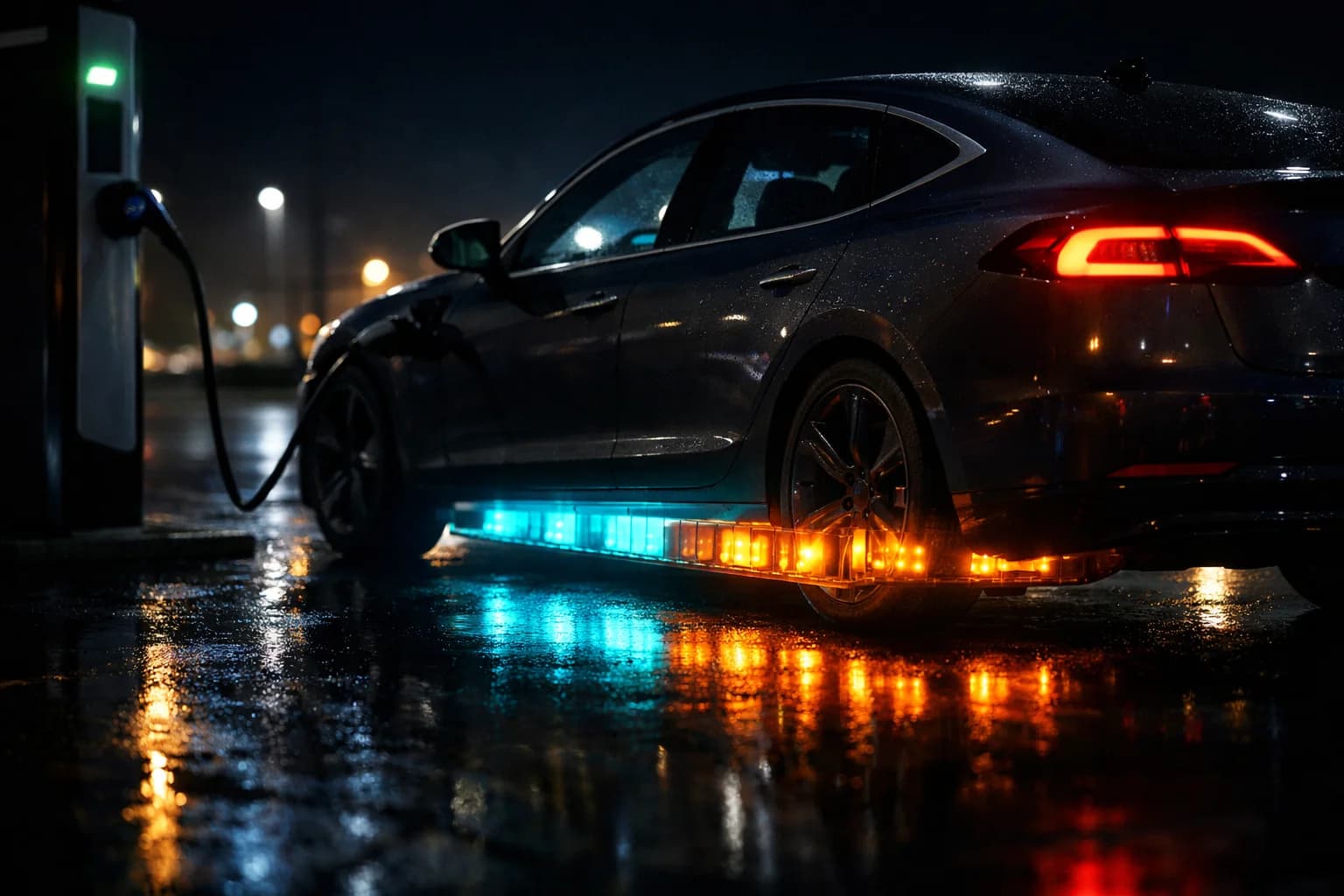
Samochód elektryczny przy ładowarce z wizualizacją zasięgu.

In short: dashboard range is an algorithm, not a measurement — verify degradation with battery data, not a 'nice number'

The range indicator (GOM) is a forecast based on recent driving style, temperature and consumption. It can be 'boosted' before a buyer's visit — without any repair to the car.

If you want to assess the real battery condition, look at metrics: SOH, cell balance (Delta V), temperatures, behaviour under load and charging history.

If you confuse SOH with SOC, you can easily fall into the trap of '100% = healthy battery'. See: SOH vs SOC.

Zapamiętaj

Wskaźnik vs kondycja

Ładny procent na ekranie nie leczy baterii.

You go to see your dream Nissan Leaf, Volkswagen ID.4 or Kia e-Niro. The seller proudly turns on the ignition, and the dashboard shows a promising 400 kilometres of range.

'Guess-o-meter' (GOM): why EV dashboards lie and how sellers exploit it

The range indicator in electric cars is just an algorithm trying to predict the future based on the recent past. Sellers know this perfectly well. All a dealer has to do is reset the energy consumption history or drive the last 30 km at 40 km/h, without the air conditioning or radio on.

The algorithm will calculate an extremely low current draw and artificially inflate the declared range to values the car will never achieve in mixed driving.

So remember: real battery capacity and physical EV battery degradation are parameters you cannot measure with a dashboard indicator.

BMS adaptation reset: why the car briefly 'pretends to be new' after clearing learned values

Another major sin of the used market is forcing the car's computer (BMS) to forget data about natural cell degradation. A mechanic with a cheap scanner can erase the learned internal resistance values of the cells. The car behaves as if it just left the factory for a few days. Only after several full charging cycles does the system discover the true chemical state of the cells and drastically cut the range on the screen.

This is a mechanism similar to 'clearing faults' in hybrids. If you want to recognise such tricks, see: how to recognise fault resets and incomplete drive cycles.

Did you know...Batteries

Dla baterii NMC złota zasada to "ładuj do 80%, rozładowuj do 20%". Regularne ładowanie do 100% przyspiesza degradację chemiczną katody o nawet 30% w porównaniu do limitu 80%.

Read more

How to check real range before buying (a procedure without guessing)

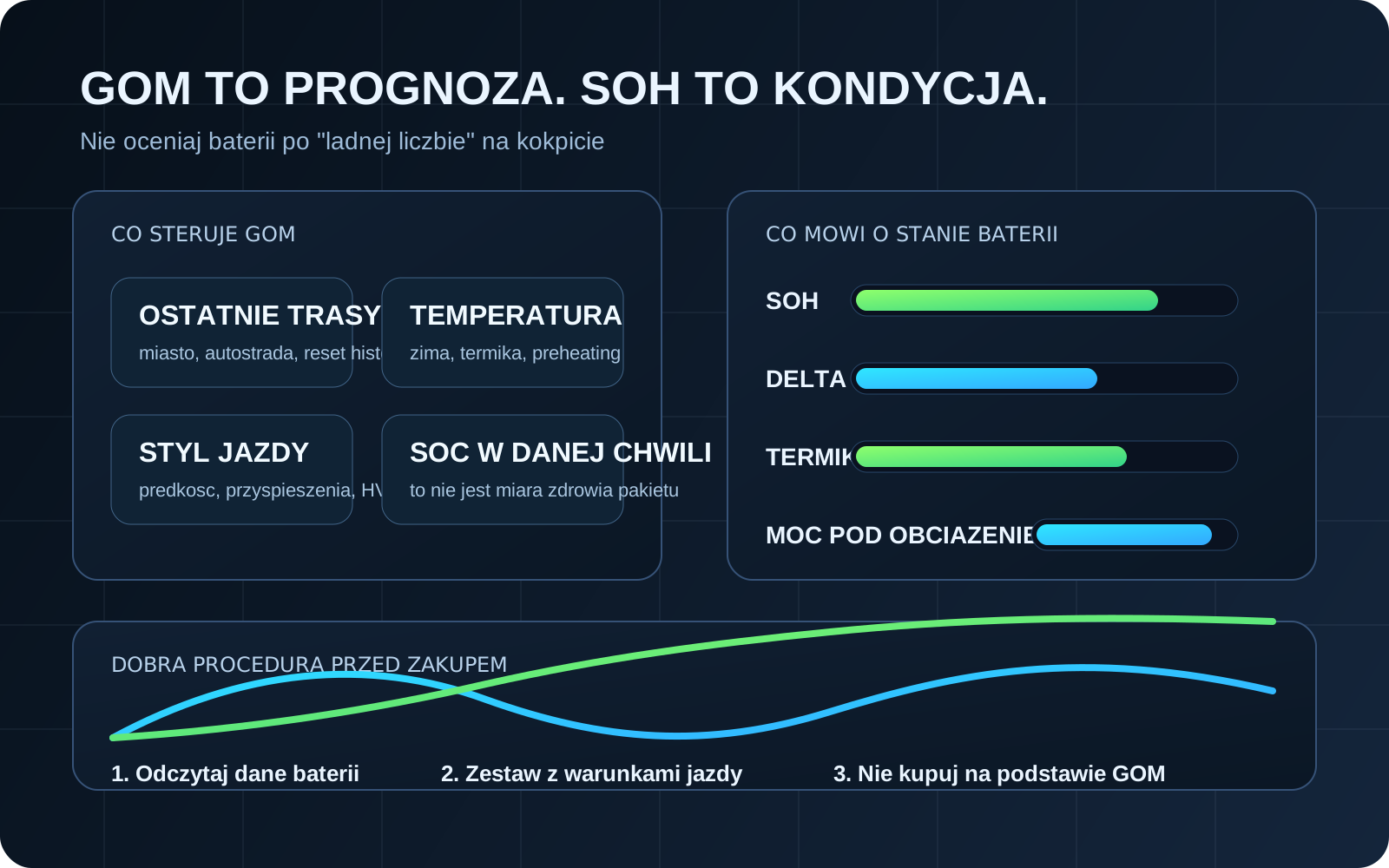
Diagram comparing GOM with SOH, Delta V and EV battery thermal management.
GOM vs SOH

Dashboard range is just a forecast

Buyers should distinguish the number on the screen from the data that truly shows the pack's condition and the risk of costs.

Range is the result of many variables (temperature, speed, driving style, tyre pressure, heating, battery thermal state). Therefore, the procedure must distinguish 'physics' from degradation.

The best compromise during an inspection is to combine a short road test with reading battery data (not just the range screen).

  • Check the consumption history (kWh/100 km) and conditions of recent trips — this directly affects the GOM.
  • Check if the car has been 'boosted': history reset, city driving at 30–40 km/h, HVAC turned off.
  • If possible: assess battery behaviour under load (voltage drops, temperatures, power limitations).
  • Do not evaluate the battery only at 100% SOC — weak cells often only show up at lower SOC.
  • Cross-reference range with net/gross capacity (buffer) and weather conditions.
Typowa pułapka

Test pod obciążeniem

Pakiet może wyglądać zdrowo tylko do pierwszego większego testu.

Range is the result of many variables (temperature, speed, driving style, tyre pressure, heating, battery thermal state). Therefore, the procedure must distinguish 'physics' from degradation.

Interpreting range drop: winter, degradation or a thermal problem?

In winter, a range drop is often normal (cell internal resistance, cabin heating, battery warming). This does not necessarily mean the battery is 'dead'.

On the other hand, sudden, step-like range drops a few days after purchase often suggest a reset of learned values or 'masking' of weak cells at high SOC.

If you want to go deeper into battery measurement (SOH/Delta V/thermal), see: SOH, Delta V and HV pack thermal analysis. This knowledge protects against the scenario where, right after purchase, a traction battery replacement cost of several tens of thousands of zlotys appears.

Purchase decision: buy, negotiate or walk away (based on data, not the GOM)

If the battery data is consistent and the differences between declared and real range result from conditions (temperature, speed, HVAC) — you usually have a healthy foundation for purchase.

If you see cell spreads, illogical BMS behaviour or traces of resets — the risk increases. In that case, it is better to negotiate hard or walk away from the example.

If you want to base your decision on field measurements: mobile pre-purchase vehicle verification.

FAQ: EV range drops in practice

Can charging an electric car to 100% before a buyer's visit hide faulty cells?+

Yes. At full charge (100% SOC), the voltage across the cells is artificially boosted and equalised through passive cell balancing. This effectively hides so-called voltage 'spreads' (Delta V). Weak cells only reveal themselves at lower SOC, e.g. below 20%, when their voltage drops drastically, causing sudden, step-like range drops on the screen.

Why does EV range drop drastically in winter, even if the battery SOH is 100%?+

A sudden drop in range in winter is mostly physics, not battery degradation. Cold lithium-ion cells have significantly higher internal resistance, and some energy must be used for electric PTC heaters to warm the cabin. In spring, the 'lost' winter range fully returns to normal.

What is the 'battery buffer' (Gross vs. Net Capacity) and how does it affect degradation?+

EV manufacturers factory-lock access to the full battery capacity. For example, a pack may have 64 kWh of total (gross) capacity, but the user can only fully use 60 kWh (net). This invisible 'buffer' protects the cells from deep discharge and overcharging, slowing chemical degradation over years of use.

Related services

If you want to verify this, check the service

Consult result