SEP G1 and F-gases: what these certificates mean in hybrid and EV service?
In electromobility, safety is the foundation. Qualifications and procedures determine whether a repair will be effective and safe.
In electromobility, safety is the foundation. Qualifications and procedures determine whether a repair will be effective and safe.
In EV/HEV, the problem is rarely a "lack of tools" — more often it's an incorrect procedure, misinterpretation of a measurement, or system contamination (e.g., A/C).
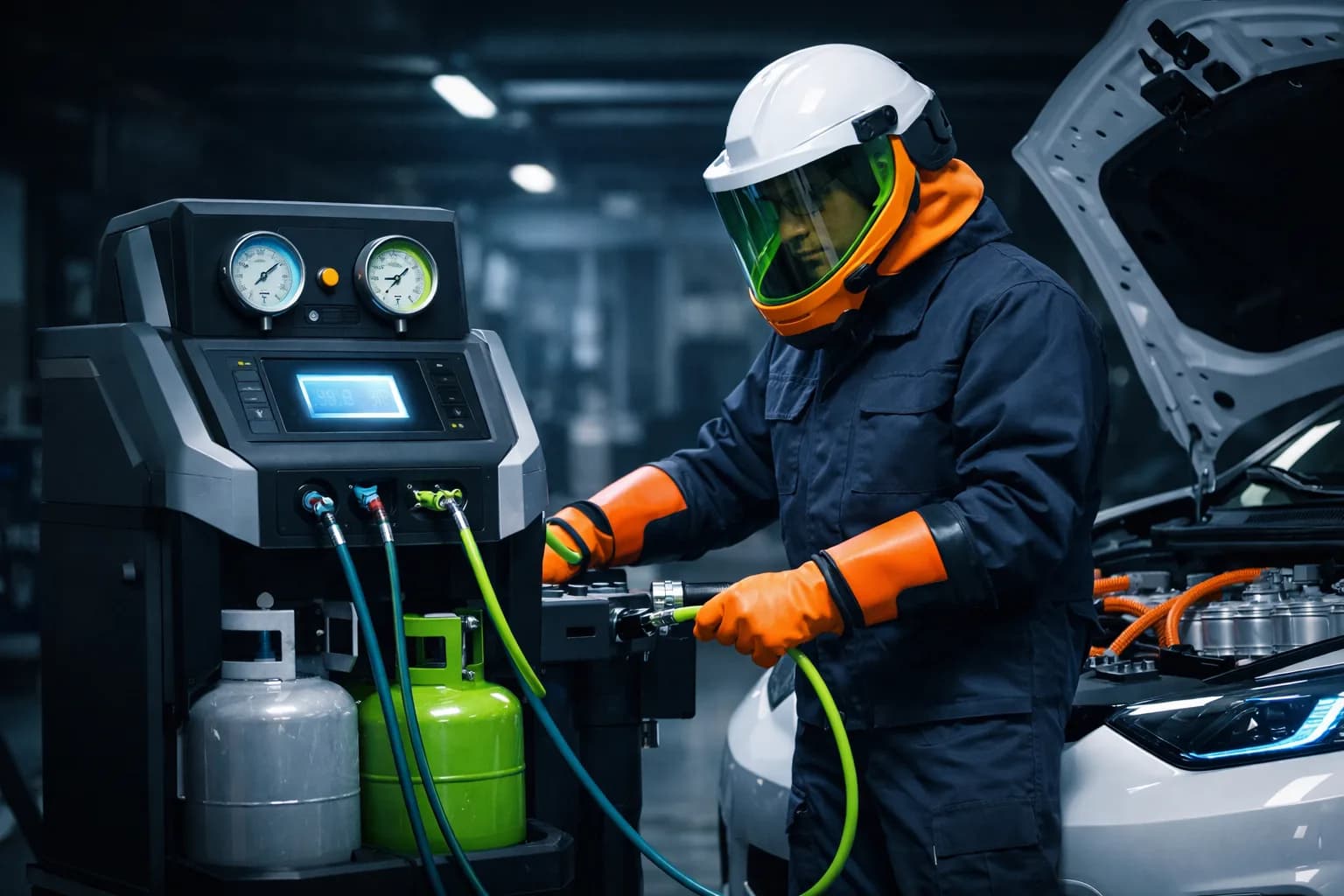
SEP G1 means the person is trained to work with electrical devices and safety principles. The F-gas certificate concerns the legal and correct handling of A/C systems (refrigerant, tightness, procedures).
For you as an owner, the most important thing is whether the service can show: a diagnostic process, a measurement result (e.g., HV insulation), and a clear conclusion — not just a "nice piece of paper."
Bezpieczeństwo pomiaru
W układach HV spokojny pomiar jest cenniejszy niż szybka pewność.
In electromobility, safety is the foundation. Qualifications and procedures determine whether a repair will be effective and safe.
SEP G1 covers devices up to 1 kV — and HV systems in electric vehicles operate in the range of 60–1000 V DC, meaning these qualifications are required for any interference with high-voltage circuits.
In the EV context, it means conscious work with the HV system, not improvisation. Insulated tools must meet the IEC 60900 standard (rated to 1000 V). The minimum insulation resistance required by ECE R100 is 100 Ω/V. HV systems with voltage >60 V DC require interlocking — breaking the circuit cuts off the power.
The F-gas certificate, regulated by EU Regulation 517/2014, is required for handling A/C systems with >3 kg of refrigerant or GWP >5. In practice, this means R134a (GWP = 1430) requires a certificate, while R1234yf (GWP = 4) formally may not require one, although service procedures remain analogous. Look not only for "SEP" itself but also for signs of mature work: disconnecting HV according to procedure, insulation measurement, checking harness condition, and documenting the result.
Dla baterii NMC złota zasada to "ładuj do 80%, rozładowuj do 20%". Regularne ładowanie do 100% przyspiesza degradację chemiczną katody o nawet 30% w porównaniu do limitu 80%.
Read more→Baterie LFP (np. BYD Blade Battery) powinny być ładowane do 100% co najmniej raz w tygodniu — to pozwala BMS prawidłowo zbalansować napięcia w celach.
Read more→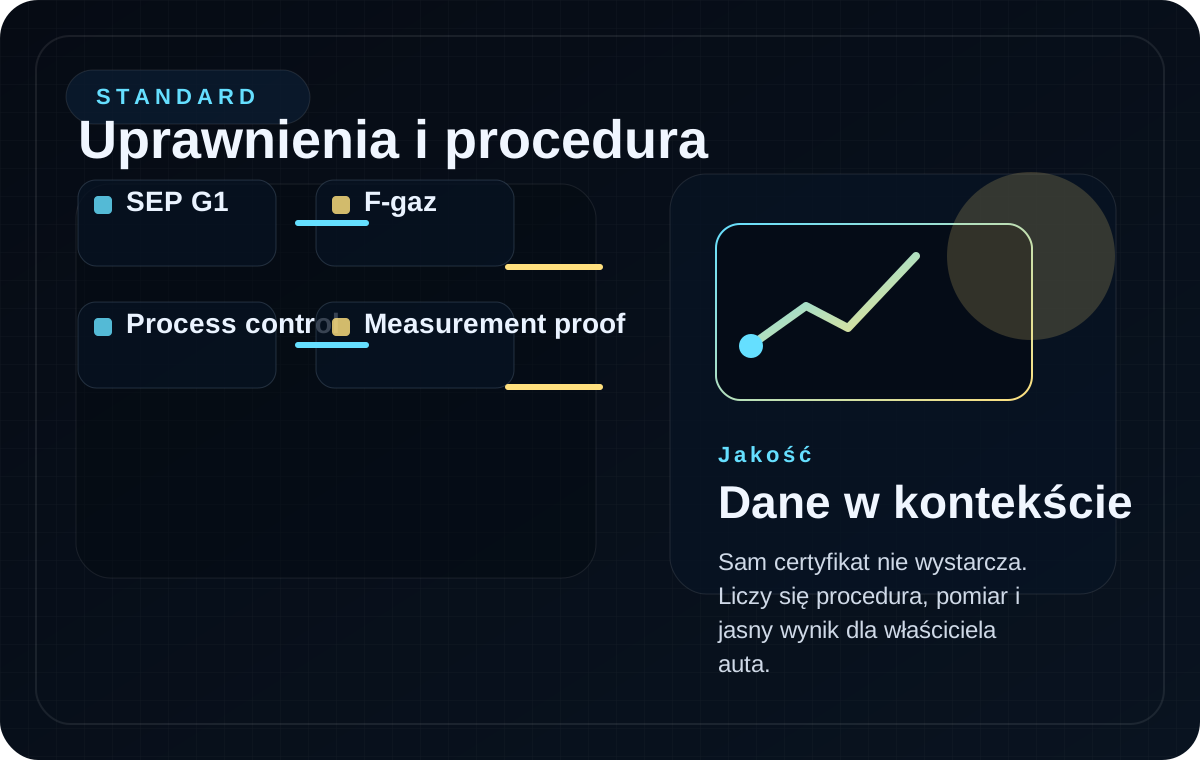
Qualifications + process + measurement
A certificate only makes sense when it is backed by a real procedure, a measurement result, and a clear interpretation for the car owner.
Air conditioning in electrified cars has a direct impact on battery thermal management and system safety.
The certificate confirms that the service knows the principles of handling refrigerant and oils in high-voltage systems.
In practice, it comes down to two things: legality and process cleanliness (so that the wrong oil or contaminants don't enter the EV/HEV system). We discuss this topic in more detail in the guide: PAG vs POE in hybrid and EV.
Typowy błąd
Tu większym problemem niż błąd bywa zbyt lekka ręka do tematu.
Air conditioning in electrified cars has a direct impact on battery thermal management and system safety. The certificate confirms that the service knows the principles of handling refrigerant and oils in high-voltage systems.
Don't just ask "do you have certificates?" Ask about what the procedure looks like and what measurement result you will receive.
A good service can explain: what they measure, what they measure with, what the result ranges are, and what that means for safety and costs.
Before commissioning a service, it's worth asking about certificates and the specific diagnostic process.
It's a simple way to reduce the risk of repairs done by trial and error.
If the car has had an accident, flooding, or an insulation fault — the first step should be verifying the safety of the HV system, and only then further work.
FAQ: Mechanic qualifications and your safety
No. Basic mechanical service (suspension, engine oil change, brake pads) does not require interference with the high-voltage system. However, any work on orange cables, the inverter, the A/C compressor, or replacing the 12V battery (connected to the BMS network) must absolutely be performed by a person with electrical qualifications.
Yes, the register of businesses and personnel holding F-Gas certificates is public and maintained by the Office of Technical Inspection (UDT). A service not listed in this register handles A/C illegally, often working on old, dirty stations (oil contamination), which in EVs directly threatens high-voltage circuits.
Car manufacturers are very strict about interference with the HV system. Unprofessional connection of measuring equipment by persons without hardware authorization or SEP qualifications can result in so-called frozen frames and logs in the control unit's memory indicating unauthorized access, which in extreme cases gives the authorized dealer grounds to void the warranty on the traction battery.
Certyfikowany (F-Gazy) serwis chroniący Twój kompresor wysokiego napięcia przed spaleniem.
Szukanie przebić do masy po kolizjach, zalaniach i błędach systemu hybrydowego.