Hybspec
2026-03-0712 minVerified 2026-03-30Baterie, HV i BezpieczeństwoSeries: Baterie i Degradacja

Types of Batteries in Electric Cars and Hybrids: What's Hiding Under the Floor?

NMC, LFP, NCA, NiMH — these acronyms tell you more about your car than the internal combustion engine's displacement. Battery chemistry defines range, charging and the rate of degradation.

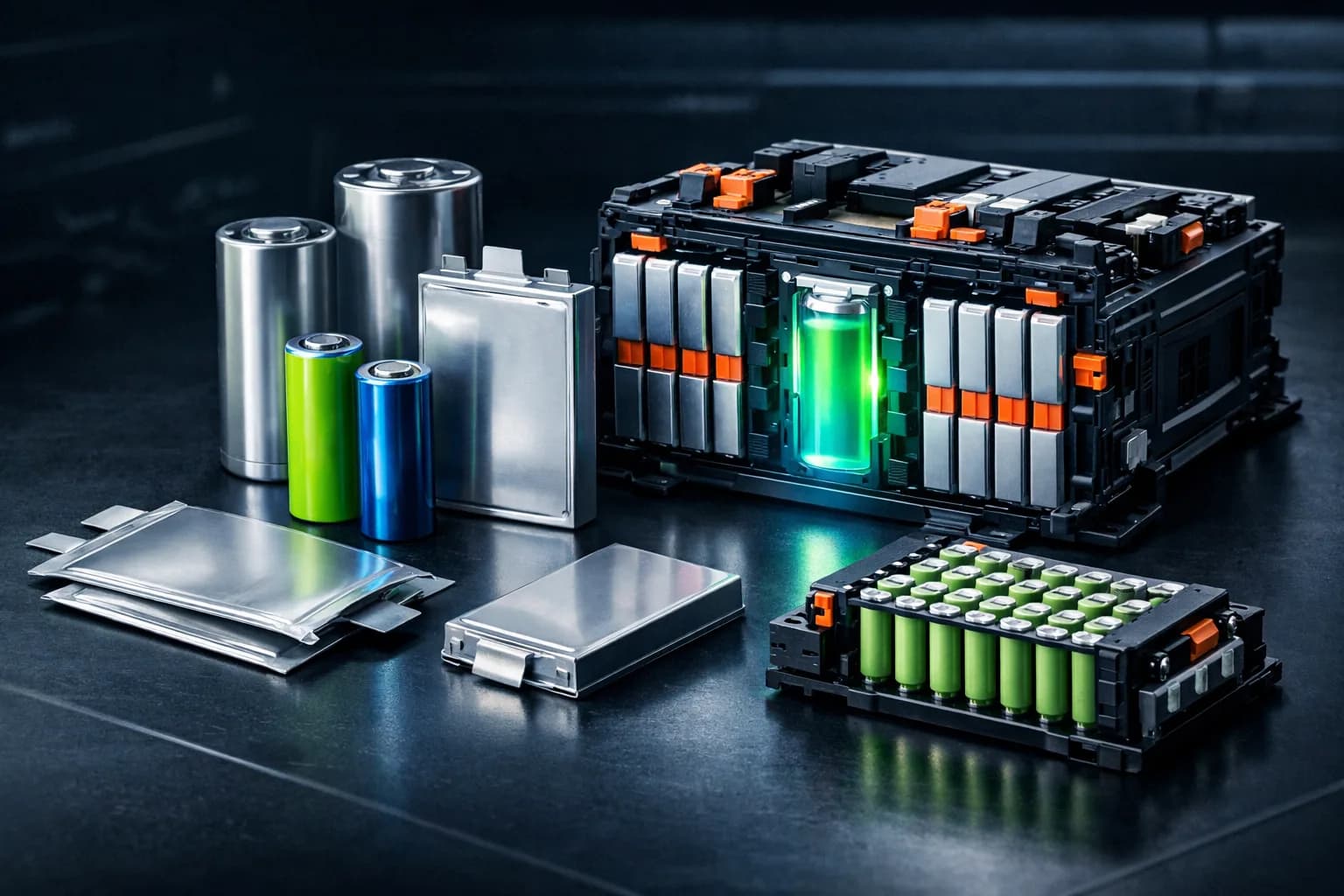
Różne typy ogniw i modułów baterii EV oraz HEV.

Introduction: why battery chemistry matters

For many drivers, switching to an electrified car means entering a completely new, unfamiliar world. Concepts like "engine displacement", "timing belt" or "injectors" disappear, and in their place come acronyms: NMC, LFP, SOH or BMS. When deciding to buy an EV (electric) or HEV/PHEV (hybrid), you need to be aware that not all batteries are equal.

The applied cell chemistry defines not only the range and charging speed of your car, but above all the way you should operate it to make it last for years. As Hybspec engineers, for whom laboratory SOH and cell voltage difference testing is everyday work, we have prepared a comprehensive guide to energy storage technologies for you.

Zapamiętaj

Wskaźnik vs kondycja

Ładny procent na ekranie nie leczy baterii.

NMC, LFP, NCA, NiMH — these acronyms tell you more about your car than the internal combustion engine's displacement. Battery chemistry defines range, charging and the rate of degradation.

Lithium-Ion Batteries (Li-Ion) — Kings of Electromobility

The term "lithium-ion battery" is actually an overarching category that covers several different chemical compositions. Their operating principle is common: lithium ions move between the anode and cathode during charging and discharging processes. What the cathode is made of drastically changes the battery's properties.

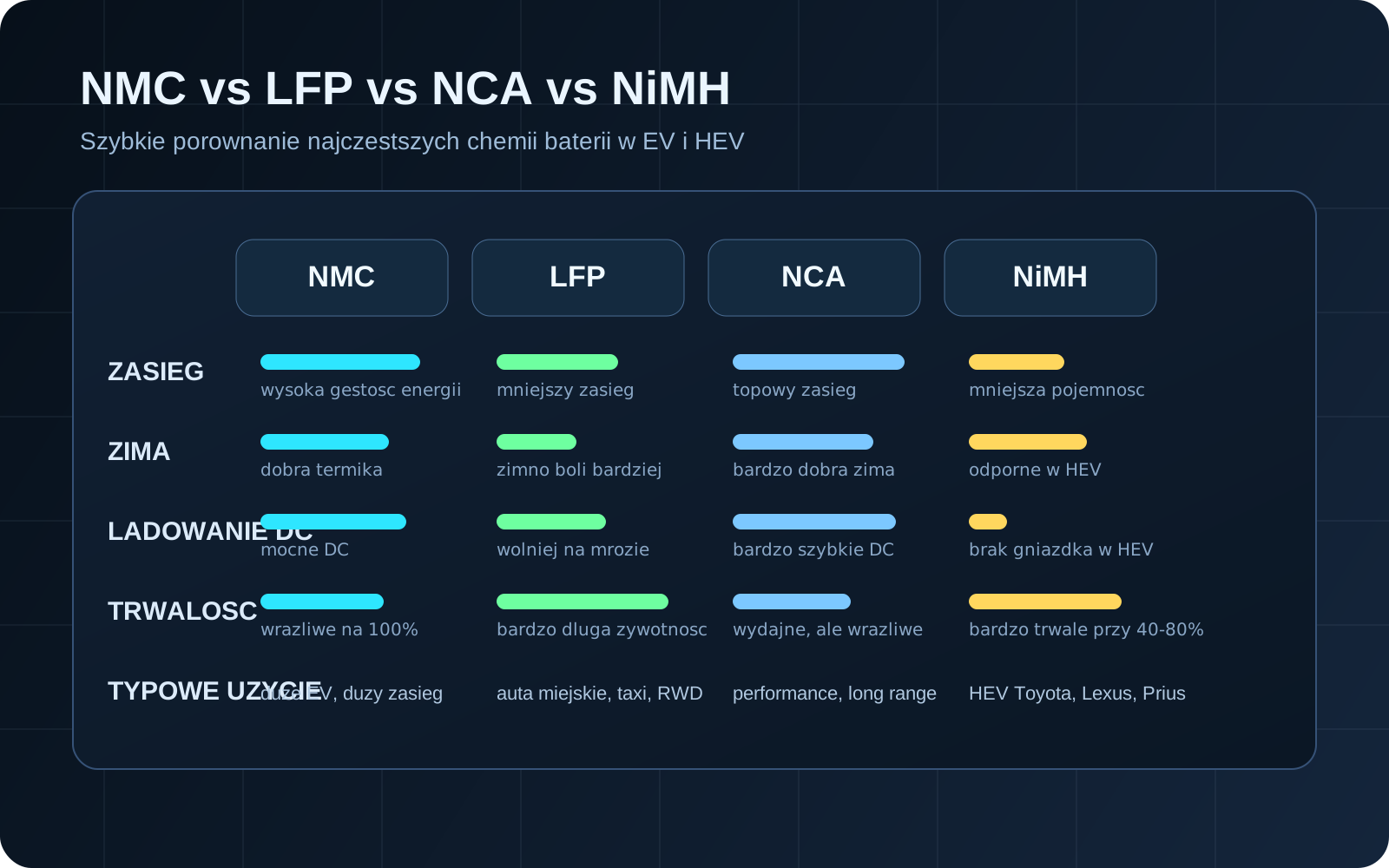
Matrix of EV and HEV battery chemistries: NMC, LFP, NCA and NiMH.
Chemistry comparison

There is no single "best" battery

Each chemistry wins in a different scenario: range, cost, winter thermal performance, durability, or application in a classic hybrid.

NMC (Nickel-Manganese-Cobalt) — The Golden Standard of Range

Over the past decade, this was the most popular chemistry used in European and Korean electric cars (e.g., Volkswagen ID.4, Kia EV6, Audi e-tron). If you need support with VAG electronics also beyond HV: VW diagnostics, Audi diagnostics and the VAG section with platform procedures.

Advantages: They offer excellent energy density (a lot of kWh in a relatively light and small package), which translates into very long ranges. They perform well in low temperatures and can accept huge charging power at DC stations.

Disadvantages: Due to the content of expensive cobalt, they are costly to produce. Additionally, this chemistry is sensitive to being held at extreme states of charge.

How to care? The golden rule of NMC operation: "charge to 80%, discharge to 20%". Charging to 100% should only be done occasionally, just before a long trip.

Did you know...Batteries

Baterie LFP (np. BYD Blade Battery) powinny być ładowane do 100% co najmniej raz w tygodniu — to pozwala BMS prawidłowo zbalansować napięcia w celach.

Read more
Did you know...Batteries

Dla baterii NMC złota zasada to "ładuj do 80%, rozładowuj do 20%". Regularne ładowanie do 100% przyspiesza degradację chemiczną katody o nawet 30% w porównaniu do limitu 80%.

Read more

NCA (Nickel-Cobalt-Aluminum) — Tesla's Choice

A technology very similar to NMC, used mainly by Tesla in Long Range and Performance models (and partially by Audi). Aluminum replaces manganese here, which allows for even higher energy density and lower weight, unfortunately at a slight cost to overall cycle life compared to NMC.

LFP (Lithium Iron Phosphate) — The Armored Revolution from Asia

Just a few years ago treated as a budget technology, today LFP batteries (e.g., BYD's innovative structural Blade Battery cells) are revolutionizing the market. They are installed not only in Asian cars, but also in base versions of Teslas (Model 3/Y RWD) and new cars from Europe (e.g., Volvo EX30).

Advantages: They are incredibly durable (withstand even 3-4 thousand charge cycles without significant degradation), very safe (high thermal resistance to ignition) and cheaper to produce because they contain no cobalt.

Disadvantages: Lower energy density, meaning the battery must be heavier to store the same amount of energy as NMC. In winter, low temperature significantly limits their performance and charging speed until the system warms the pack.

How to care? LFP batteries love being charged to 100%! It is even recommended at least once a week so the BMS (Battery Management System) can properly balance the voltages in individual cells. Understanding this phenomenon is crucial, which is why we always explain the specifics of used Chinese electric cars to our clients.

Typowa pułapka

Test pod obciążeniem

Pakiet może wyglądać zdrowo tylko do pierwszego większego testu.

Just a few years ago treated as a budget technology, today LFP batteries (e.g., BYD's innovative structural Blade Battery cells) are revolutionizing the market. They are installed not only in Asian cars, but also in base versions of Teslas (Model 3/Y RWD) and new cars from Europe (e.g., Volvo EX30).

NiMH (Nickel-Metal Hydride) — Japanese Indestructibility

The lifespan of a battery in a hybrid with a NiMH pack (e.g., Toyota Prius II/III, Auris, older Lexus) with proper operation can reach 10-15 years.

Specifics: These batteries do not offer high capacity and are very heavy, but in closed systems (where the computer ensures their charge always oscillates between 40% and 80%) they can reliably cover even several hundred thousand kilometers. Unfortunately, with age they lose their efficiency, and capacity drops drastically. Worn NiMH modules show large voltage spreads (Delta V), which we always analyze thoroughly when performing independent pre-purchase car verification in the field. Knowledge about the degradation of these packs is crucial to avoid being surprised by costs after purchase, about which we wrote more in the article on Hybrid Synergy Drive faults.

The Future: Solid-State Batteries

Currently, all lithium-ion batteries have a liquid or gel electrolyte. The breakthrough the industry is waiting for (announced, among others, by Toyota for 2027-2028) is solid-state batteries. The liquid electrolyte will be replaced by a solid material (e.g., ceramics or polymers). This means completely eliminating the risk of fire, the ability to charge a car in a dozen or so minutes, and even doubling the range while maintaining the same weight. However, before that happens, today's technologies will remain with us on the secondary market for the next dozen or so years.

Degradation and SOH: Knowledge Protects Your Wallet

Regardless of whether your car has an NMC pack or an armored LFP, every battery undergoes a natural aging process (chemical degradation). The SOH (State of Health) parameter determines what percentage of factory capacity and efficiency remains in the cells.

Don't trust the dashboard indicators when buying a used car. Dealers can clear BMS adaptations, making the car temporarily regain its "youthful" form. To be 100% sure what kind of chemistry lies under the floor and whether it is safe, commission us for an independent, laboratory-grade diagnostics with live data readout.

FAQ: Battery Chemistry in a Nutshell

Why can LFP batteries be charged to 100%, while NMC is recommended to be charged to 80%?+

If you're wondering how to charge LFP batteries, the answer is simple: this chemistry is much more stable at high voltage, so manufacturers recommend regular charging to 100% so the BMS can properly balance the cells and calibrate the range. In contrast, NMC cells at 100% charge are subjected to greater chemical stress, so a daily limit of 80% is safer.

Can older hybrids with NiMH batteries be charged from a wall outlet?+

No. Traditional hybrids (HEV) with NiMH batteries (e.g., older generations of Toyota Prius or Auris) are closed systems where the battery is charged only through regeneration (energy recovery from braking) and by the internal combustion engine. Charging from a wall outlet is only possible in Plug-in hybrids (PHEV), which have a suitable onboard charger (OBC) and a Type 2 socket.

Which battery is better for winter: LFP or NMC?+

NMC cells handle low temperatures better — they have less power loss and accept current faster during charging in the cold. LFP batteries are more sensitive to cold, so range can drop drastically in winter, and charging on a DC fast charger will take longer until the thermal system (e.g., heat pump) properly warms the pack.

Related services

If you want to verify this, check the service

Consult result